
Many manufacturers view labelling as a minor administrative task, yet the cumulative cost of manual errors and rework can be staggering. When manual label application fails to keep pace with modern production lines, the financial impact is felt through the high cost of rejected shipments and the drain of unproductive labour.
To justify print and apply investment, it is essential to look beyond the hardware price and focus on the cost savings automated labelling delivers. Understanding the ROI of print and apply labelling technology requires a breakdown of both direct savings and the mitigation of hidden costs associated with manual processes.
Quantifiable Labour Cost Reductions
Manual label application is inherently repetitive and time-consuming. In a typical manual setup, an operative must peel, align, and apply a label to each unit or pallet. This process is physically demanding and often leads to fatigue-related slowdowns as a shift progresses.
By integrating a print and apply system, these manual tasks are eliminated. This does not necessarily mean a reduction in headcount. Instead, it allows management to reassign skilled staff to higher-value roles. Rather than performing repetitive manual work, employees can focus on quality oversight, preventative maintenance, or complex assembly tasks that require human judgment.
Increased Productivity and Throughput
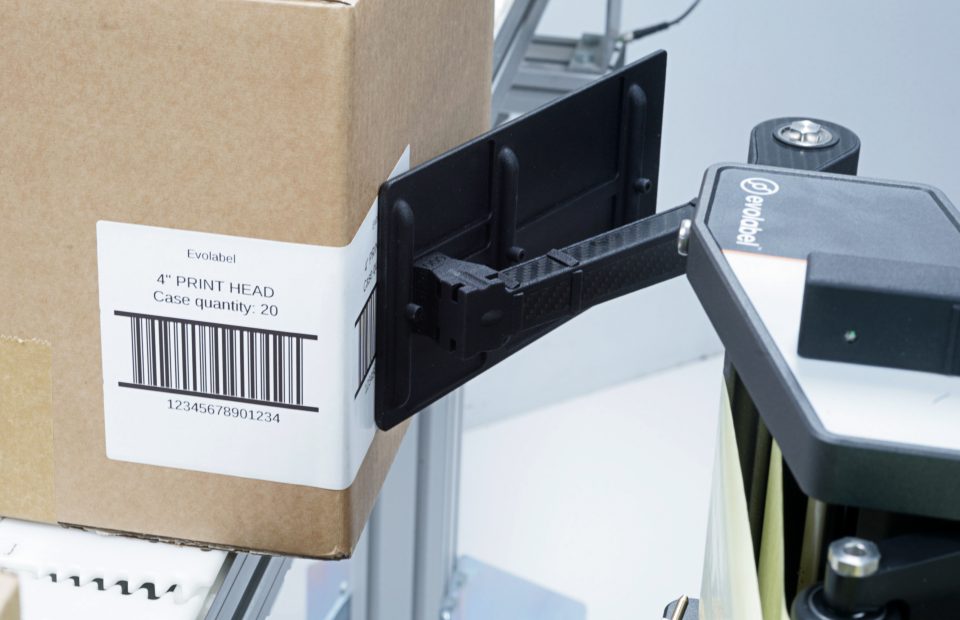
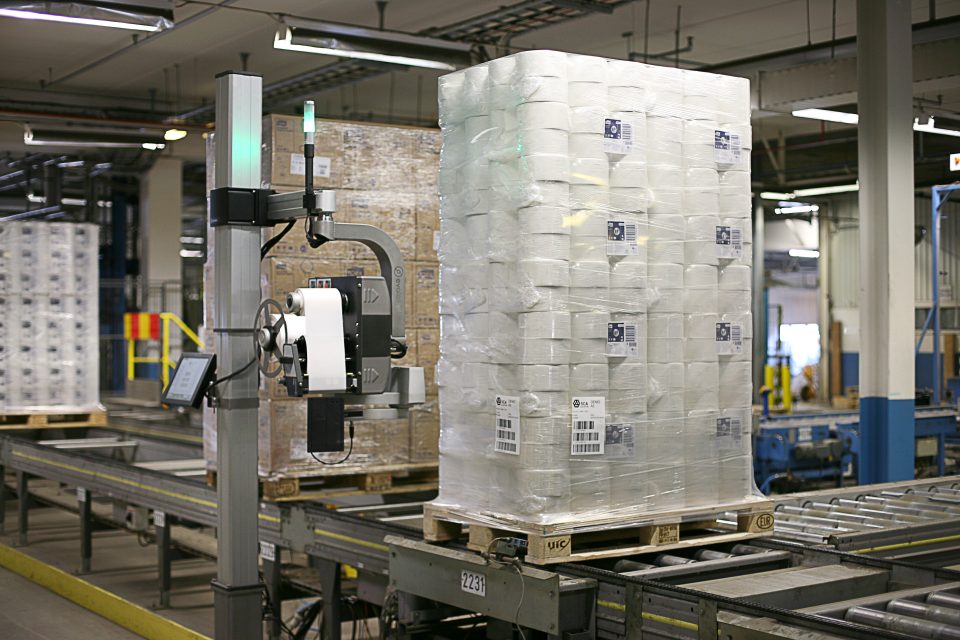
The speed difference between manual and automated systems is significant. A manual worker may comfortably apply 10 to 15 labels per minute with consistent accuracy. In contrast, ILS print and apply systems, such as the Evolabel Belt and Tamp applicators, are capable of reaching speeds of up to 120 labels per minute.
When labelling becomes automated, it removes the end-of-line bottleneck. Higher throughput ensures that the output of upstream machinery is never restricted by the inability to label and dispatch finished goods quickly enough.
Eliminating The High Cost of Rework
Human error is an inevitable factor in manual labelling. Incorrect placement, skewed labels, or the application of the wrong batch data can lead to entire production runs needing rework.
The costs of rework include:
- Additional labour hours to strip and re-label products.
- Wasted label stock and adhesive.
- Potential damage to primary packaging during label removal.
ILS systems integrate directly with your ERP, WMS, or bespoke production software using industry-standard protocols. This ensures that the data printed is pulled directly from the source of truth, which eliminates data entry errors. Additionally, our label applicators use sensors to ensure every label is placed with millimetre precision.
Avoiding Regulatory and Retailer Fines
In regulated industries such as food and pharmaceuticals, there are strict legal requirements around labelling.
Inaccurate or illegible barcodes can lead to:
- Retailer rejections: Large retailers often levy heavy fines for non-compliant pallets or “no-scans” at their distribution centres.
- Regulatory sanctions: The Food Standards Agency (FSA) requires strict adherence to allergen and batch information. Failure to comply can result in forced product recalls.
The cost of a single major recall or a series of retailer fines can often exceed the cost of a Print + Apply system. Automation provides an audit trail and ensures that every label meets the required standards for legibility and data accuracy.
Minimising Material Waste
Traditional labelling often involves ordering large batches of pre-printed labels. If a product formulation changes or a new regulatory logo is required, the remaining pre-printed stock becomes obsolete and must be scrapped. Print and apply technology allows for on-demand printing, meaning there is no need to hold expensive inventories of pre-printed labels.
Our solutions further reduce waste through precise ribbon-save technologies and the ability to handle short-run batches without the physical waste typically associated with traditional label press setup and changeover.
Maximising Uptime Through Reliable High Speed Automation
While labour savings are often used to justify automation, one of the most significant drivers of ROI is the ability to maintain consistent production speeds without interruption.
In many production environments, labelling is not just a task, it is a critical control point. If the labelling system stops, the entire line can be forced to slow down or halt altogether. This is where the design and reliability of the system become essential.
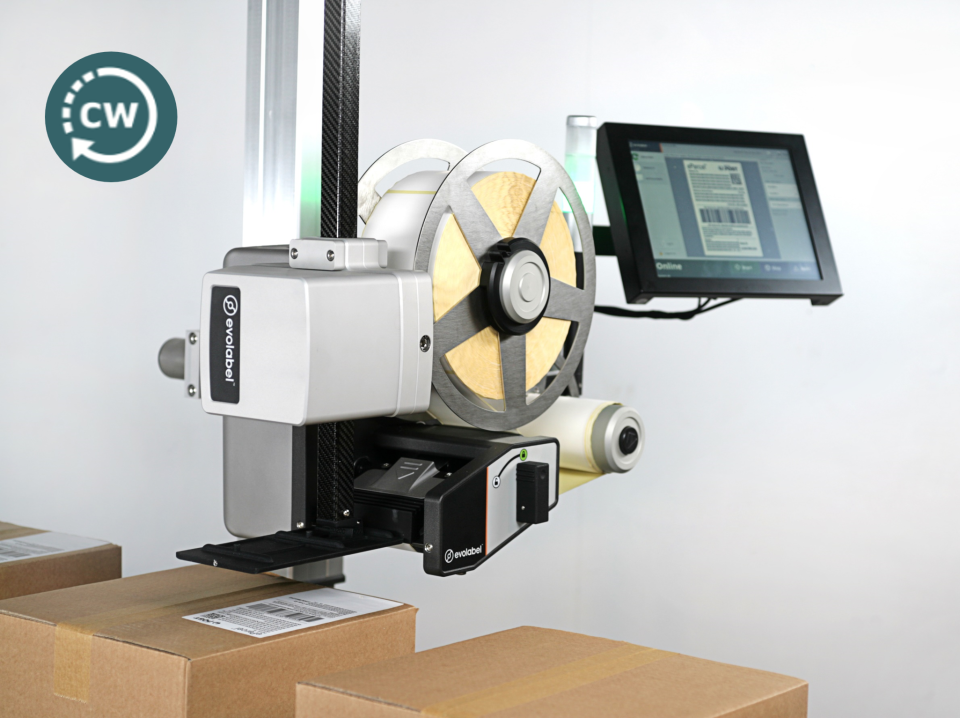
ILS print and apply systems, powered by Evolabel technology, are engineered specifically for high-availability operations.
Unlike traditional systems that rely on mechanically driven application cycles and components such as clutches that require ongoing adjustment, Evolabel applicators utilise controlled, stepper-driven motion and a simplified mechanical design.
By eliminating the common failure points found in traditional applicators, these systems secure a higher return on investment through several key operational efficiencies:
- High-speed capability: Capable of operating at speeds of up to 120 labels per minute, ensuring labelling never throttles your production capacity.
- Consistent, repeatable application: Stepper-controlled movement ensures precise label placement without mechanical drift that necessitates frequent recalibration.
- Reduced mechanical wear: Fewer moving parts and the removal of clutch-based mechanisms means less wear over time and fewer points of failure.
- Fast, tool-free maintenance: Key components such as printheads and rollers can be replaced in minutes by onsite operators, eliminating the need for specialist engineer intervention for routine wear parts.
- Reliable performance in demanding environments: The robust aluminium chassis and simplified design allow the system to perform consistently in industrial and cold-store conditions.
The Financial Impact of Reliability
Unplanned downtime is one of the most expensive issues in manufacturing. Even a short stoppage can result in lost production, missed dispatch windows, and increased labour costs as operators wait for the line to restart.
In many cases, the ROI is not driven by replacing people, but by ensuring the entire production line runs at its intended capacity, shift after shift, without disruption. In practical terms, this means fewer stoppages, fewer engineer callouts, and a system that continues to perform reliably long after installation.
Calculating The Payback Period
The payback period for a labelling system varies based on production volume and current labour rates. However, a common benchmark for ROI on automated labelling systems is between 12 and 18 months.
For example, consider a facility running one shift with two manual labellers. This might cost approximately £60,000 per year in direct labour. If an ILS print and apply system costs £25,000 (including installation and software integration), and it allows those two staff members to be redeployed to more productive areas, the machine could pay for itself in less than six months. This calculation does not even include the savings from reduced error rates and increased throughput.
Maximising your print and apply investment
To ensure you achieve the fastest possible ROI, consider the following factors:
- Careful planning: Evaluate your line speed, product variations, and environmental conditions before selecting a system.
- Future proofing: Choose a system with a modular design that can be upgraded if your packaging sizes or data requirements change.
- Maintenance and servicing: Utilising ILS preventative maintenance contracts ensures your system remains at peak efficiency. Our UK-based engineers provide the technical support necessary to prevent costly unplanned downtime and extend the operational lifespan of the hardware.
Curious about the potential ROI for your business? Contact us for a free consultation.
Email Our Team
* Please complete all fields