Maximising Labelling Throughput in Sub-zero Environments
Automating cold store labelling is a transformative step for logistics and food manufacturing. By integrating specialist sub-zero print and apply systems, facilities can maintain seamless productivity, accuracy and operational safety – even in the most demanding environments.
Not only can implementing specialised sub-zero print and apply systems allow logistics and food manufacturing facilities to protect floor operators from extreme temperatures, they can significantly reduce equipment downtime and enforce strict traceability across the entire cold chain.
Improving Health and Safety
Manual labelling poses many health and safety risks, as operators are required to stand and work in temperatures as low as –30°C. Prolonged exposure to sub-zero temperatures increases the risk of cold stress, frostbite, and hypothermia. Automation removes the need for constant human presence in these extreme temperatures.
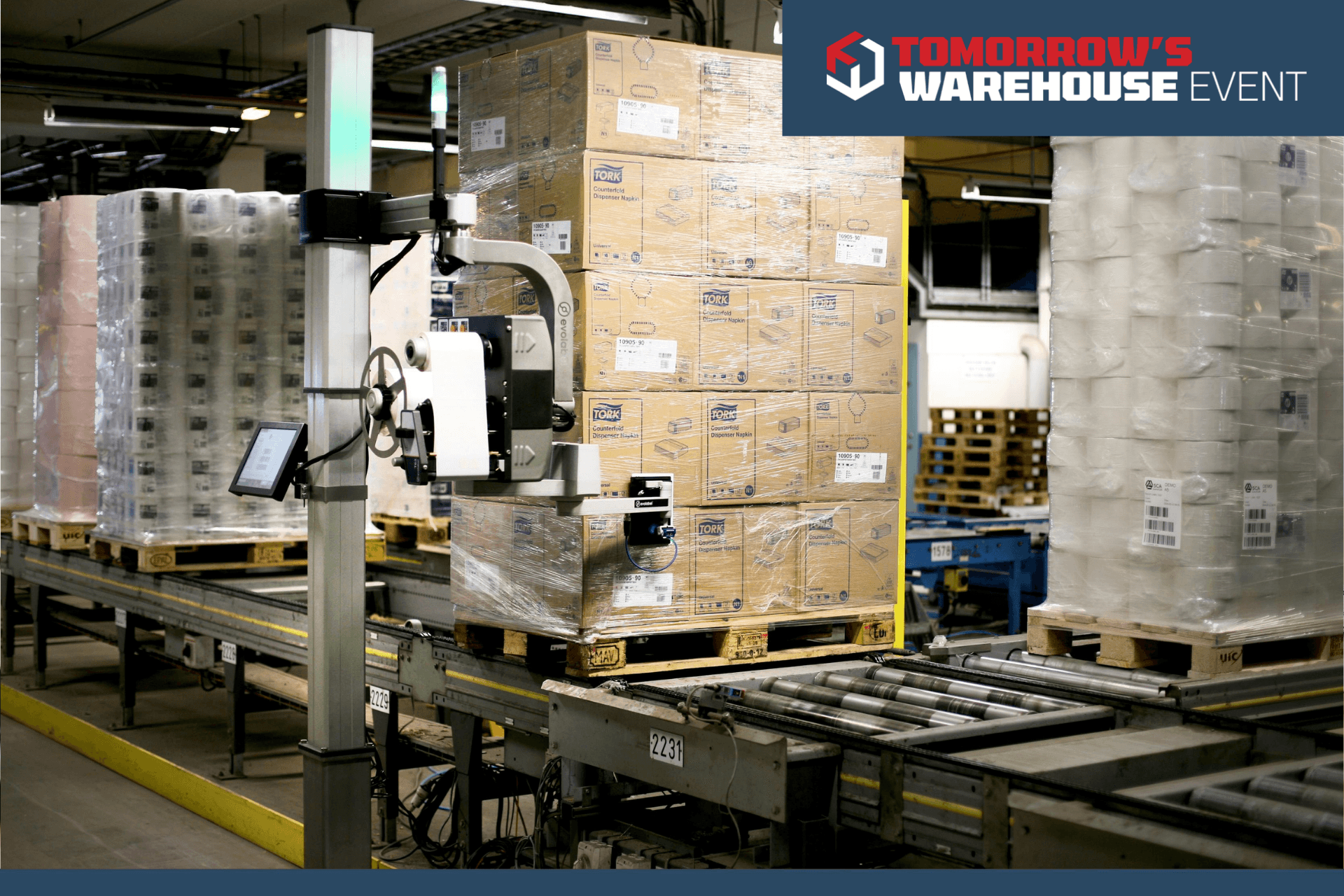
An additional concern is cold storage floors, which can be susceptible to slips and falls. With many high-throughput cold stores relying on forklifts, there is a chance of collisions with pedestrians in high-traffic areas. By eliminating the need for operators to walk around moving conveyors or pallets to manually apply labels, the likelihood of slip-and-fall injuries and forklift collisions are substantially reduced.
Reduction in Specialised Equipment and PPE
According to guidelines from the UK Health and Safety Executive (HSE), PPE should only be used when hazards cannot be adequately controlled by other means. In ultra-low temperature environments, managing thermal PPE introduces hidden operational costs and productivity losses.
By employing cold storage warehouse automation, operators no longer need to spend extended shifts inside the –30°C vault manually applying labels, and so facilities can scale back the purchase and maintenance of expensive, multi-layered thermal suits, heavy-duty insulated gloves, and specialised cold-store footwear while keeping their operators safer.
Increased Productivity
In a manual sub-zero warehouse, mandatory warming breaks are a legal requirement. Industry guidelines recommend that operators working in temperatures between –20°C and –30°C take a 10 to 15 minute warming break every 45 to 60 minutes. It is essential that workers are both safe and comfortable. However, frequent breaks do have a tangible effect on productivity.
Transitioning to automated labelling means your production line can keep moving continuously.
Learn More About Our Cold Storage Labelling Solution
Key Features of Cold Storage Labelling Systems
ILS’ cold storage labelling systems include:
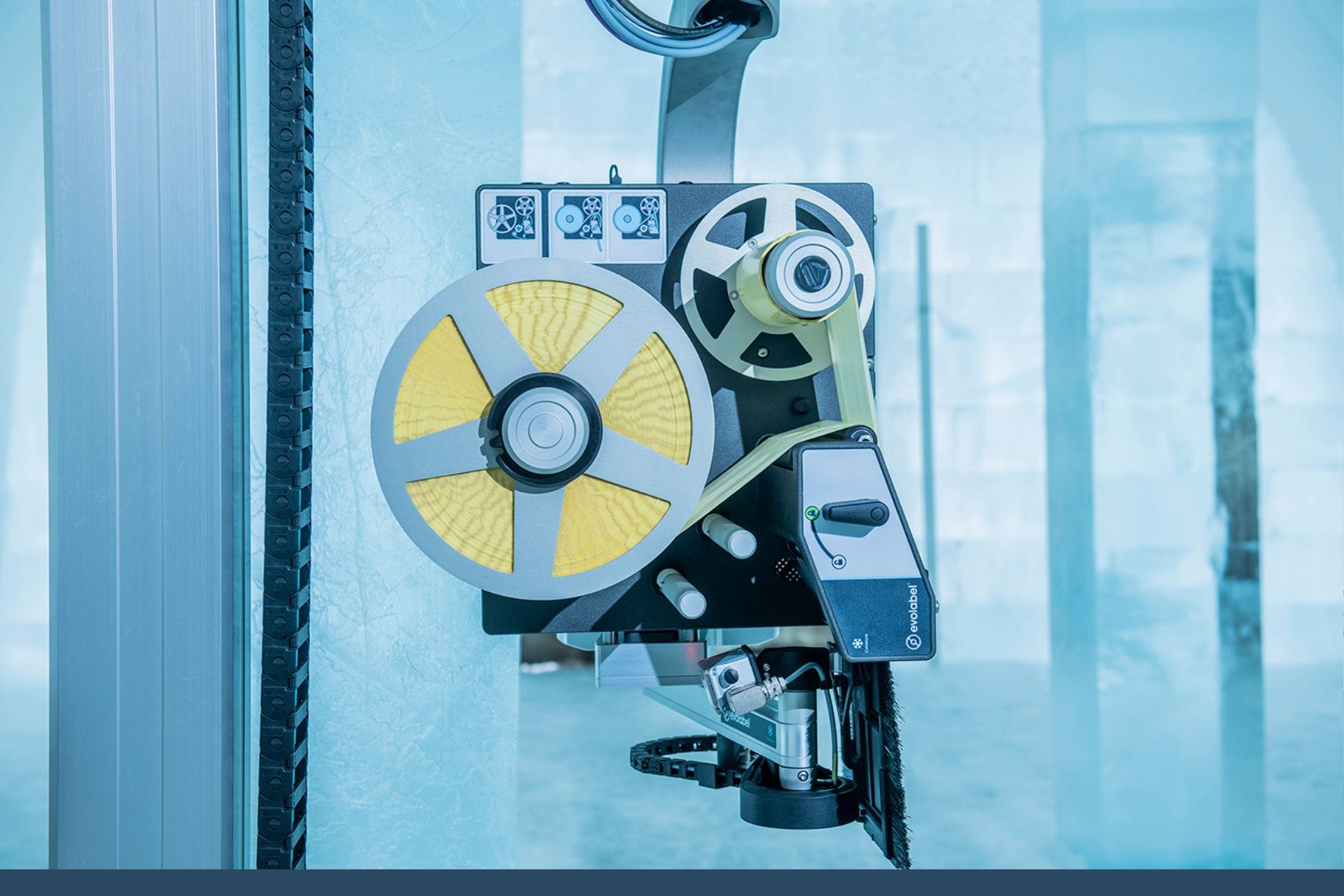
- Temperature performance: Built to maintain accurate operation in sub-zero conditions as low as –30°C, without heated enclosures or additional protection.
- Printer compatibility: Works with all standard Evolabel printers to ensure reliable, frost-resistant label application across one, two or three sides of each pallet.
- Throughput: Maintains high-speed labelling without requiring pallets to stop on the conveyor, supporting continuous production in cold store operations.
- Accuracy: Twin-motor technology delivers precise label placement for GS1 SSCC-compliant pallet identification and traceability.
- Safety: Lightweight, motorised applicator arms reduce operator interaction, eliminating the need for guarding and manual labelling in cold areas.
- Design: Compact, low-maintenance design with minimal moving parts, ideal for cold store environments where space and reliability are critical.
- Application flexibility: Capable of handling irregular pallet surfaces and mixed load configurations without compromising accuracy.
Introducing the FlexWipe
The FlexWipe applicator is a pallet labelling solution that applies labels using a tactile applicator arm and a pivoting machine mount.
Simple and straightforward to install and operate, the FlexWipe’s twin-motor technology ensures totally accurate positioning of labels and a unique identity – key to multiple logistics functions such as shipments, warehousing, expiry dates and storage location, which enables companies to comply with strict barcode regulations.
The FlexWipe performs equally well at –30°C as at normal room temperature, and features:
- Consistent label placement with barcode validation
- An automatic response to contact or resistance
- A compact footprint for limited space
- Accessible maintenance, with roll replacement in 20 seconds
The FlexWipe enables automated pallet labelling in chilled or frozen areas where manual labelling is impractical.
Cold Storage Warehouse Automation in Action
ILS transformed the working conditions and boosted efficiency at Lineage Logistics. Renowned for its cold storage expertise, Lineage operates in an environment as cold as –25°C.
Lineage Logistics were looking for a partner that could supply an automated alternative for staff manually labelling up to 1000 pallets a day with delivery address details in these harsh conditions – an inefficient process that also had potential health and safety issues as forklift drivers had to keep getting on and off their trucks to label pallets.
ILS presented the FlexWipe system, enabling pallets to be labelled while being assembled. This required less resources, resulting in lower costs, increased productivity, reduced risk of accidents and improved quality for the end user.
Since the FlexWipe’s introduction, performance has been so outstanding that Lineage have installed more of the same equipment into its Bergen Op Zoom cold store in Holland, as well as discussing future requirements for its facilities across Europe and the United States with ILS.
Read the Case Study
Our cold storage labelling solutions are used across many industries, including food processing and frozen goods, cold chain logistics and frozen distribution centres.
Contact us to discuss how our sub-zero print and apply systems can move your labelling processes out of the manual zone and into a fully automated, high-speed environment.
Frequently Asked Questions: Sub-zero print and apply systems
What is automating cold store labelling?
Automating cold store labelling is the integration of specialist print and apply systems into logistics and food manufacturing facilities. It allows these environments to maintain seamless productivity and operational safety by removing the need for manual labelling in extreme temperatures and reduces equipment downtime.
What are the primary health and safety risks of manual labelling in cold storage?
Manual labelling in sub-zero environments exposes operators to risks like cold stress, frostbite, and hypothermia. Additionally, it increases the likelihood of slip-and-fall injuries on cold floors and potential collisions with forklifts in high-traffic areas.
How does automation help improve productivity in cold storage facilities?
It eliminates the need for mandatory 10 to 15 minute warming breaks required every 45 to 60 minutes for staff working in temperatures between –20°C and –30°C, thereby ensuring continuous operations.
How can the FlexWipe be used to maximise labelling in sub-zero temperatures?
The FlexWipe maximises labelling efficiency by using twin-motor technology for precise, consistent label placement, even at temperatures as low as –30°C. Its compact, low-maintenance design allows it to perform reliably in sub-zero conditions without the need for heated enclosures, ensuring high-speed and continuous pallet labelling.
[/vc_column_text][/vc_column][/vc_row]